
Schima
Schima wallichii
A medium-hard, light-tan-to-brown Asian hardwood from the needlewood tree (Schima wallichii), used for construction, furniture, and plywood — but with irritant bark and dust.
- Type
- Hardwood
- Origin
- South and Southeast Asia and southern China (Himalayan foothills of Nepal, India, and Bhutan through Myanmar, Thailand, and southern China into Indonesia and the Philippines)
- Hardness
- ~1,000–1,100 lbf (Janka) — medium-hard
Got a board like this?
Identify any wood from a photo, free.
Overview
Schima (Schima wallichii) is a general-purpose hardwood cut from a large evergreen tree in the tea family, Theaceae. The tree grows across a wide arc of South and Southeast Asia — from the Himalayan foothills of Nepal, India, and Bhutan through Myanmar, Thailand, and southern China and on into Indonesia and the Philippines — and is a common component of subtropical and lower montane broadleaf forest. It is widely known by regional names such as needlewood, chilauni, and Chinese guger tree.
At a glance the wood is a light tan to medium reddish-brown hardwood of medium texture, with a straight to somewhat interlocked grain and a quiet, subtle figure — the modest color variation seen on our sample rather than any bold pattern. It is moderately hard and moderately heavy, works reasonably well, and is only moderately durable, which places it as a solid utility and secondary construction timber across its native range.
Characteristics
The heartwood ranges from light tan and pinkish-brown to a medium grey-brown or reddish-brown, and it is not always sharply set off from the paler, greyish sapwood. The grain is typically straight but often shallowly interlocked, the texture medium and fairly even, and the surface carries a low to moderate luster. Interlocked grain gives a faint ribbon or striped figure on quartered faces, consistent with the subtle figure and gentle color variation on our sample rather than any dramatic pattern.
Schima is a medium-density hardwood, roughly 600–750 kg/m³ air-dry, with a Janka hardness in the region of 1,000–1,100 lbf — squarely medium-hard, firmer than most softwoods and comparable to a middling temperate hardwood, but softer than oak, teak, or the dense tropical species.
Natural durability is moderate at best. The heartwood is generally rated moderately durable to non-durable, with limited resistance to fungal decay, and the sapwood is liable to borer and termite attack. It benefits from preservative treatment for any ground-contact or exterior use, and it is best kept for interior or protected work when left untreated.
Common Uses
Schima is a versatile utility hardwood used widely for general construction and joinery within its native range. Common applications include house posts and framing, beams and rafters, flooring, planking, doors and window frames, and general interior and exterior joinery where the wood is protected or treated.
Beyond construction it is worked into furniture, cabinetwork, and turnery, and its even medium texture and ready rotary-peeling make it a common plywood and tea-chest timber. It is also used for tool handles, agricultural implements, poles, and packing material, and it is valued locally as a fuelwood and charcoal source. It is a serviceable, everyday hardwood rather than a decorative specialty wood.
Working & Finishing
Schima works fairly well with both hand and machine tools. Its medium density saws and machines cleanly, but the interlocked grain can tear out or pick up when planing and moulding quartered faces, so keep cutters sharp and take fine finishing cuts to reduce chipping. It bores and turns adequately, holds nails and screws reasonably, and glues satisfactorily. It takes stain, paint, and clear finishes well, and a filler helps on the more open surfaces. The timber can be somewhat refractory in seasoning, with a tendency to check, warp, or distort if dried too quickly, so slow, controlled drying is advised.
Cautions: the bark, shavings, and especially the fine sawdust of Schima wallichii are known to be irritating. The tree's inner bark contains irritant fibers — traditionally exploited as a fish poison and a skin/nasal irritant — and cutting or sanding the wood can provoke itching, skin irritation, and respiratory or eye irritation in sensitive workers. Use effective dust extraction, a respirator, and skin and eye protection. The species is not listed under CITES and is not a globally threatened timber, but the irritant dust is a genuine handling concern.
Value & Availability
Schima is a common, locally abundant utility hardwood throughout its wide native range, where it is sold as general construction lumber, plywood, and joinery timber rather than as a named specialty wood. It is inexpensive to moderately priced in regional Asian markets and is uncommon in Western hardwood outlets; when it does appear internationally it sits at the affordable, utility end of the imported-timber spectrum.
The species is widespread and not considered globally threatened; it is not listed under CITES and carries no international trade restrictions. Much of the supply comes from natural forest and reforestation or agroforestry plantings — Schima is often planted for watershed protection and forest restoration — so managed and, in some regions, FSC-certified material can be sourced. Overall it is best regarded as a common, broadly sustainable regional hardwood.
Frequently asked questions
What kind of tree does Schima wood come from?
It comes from Schima wallichii, a large evergreen tree in the tea family (Theaceae), often called needlewood, chilauni, or the Chinese guger tree. It grows across South and Southeast Asia and southern China and is a common broadleaf forest tree there.
How hard is Schima wood?
It is medium-hard — Janka roughly 1,000–1,100 lbf and about 600–750 kg/m³ air-dry. That makes it firmer than most softwoods and comparable to a mid-range hardwood, but softer than oak, teak, or the dense tropical timbers.
Is Schima dust dangerous to work with?
The bark and fine sawdust of Schima are known irritants and can cause itching, skin irritation, and respiratory or eye irritation. The inner bark has even been used traditionally as a fish poison and irritant. Use dust extraction, a respirator, and skin and eye protection when machining or sanding it.
Is Schima durable enough for outdoor use?
Only moderately. The heartwood is rated moderately durable to non-durable and the sapwood is prone to insect attack, so untreated Schima is best kept for interior or protected work. Preservative treatment is recommended for ground-contact or exterior use.
Is Schima endangered or CITES-restricted?
No. Schima wallichii is a widespread, common species, is not listed under CITES, and carries no international trade restrictions. It is also widely planted for forest restoration and watershed protection.
Schima guides
In-depth guides for identifying, working, and valuing Schima.

Schima identified by the community
Real samples identified with Wood Identifier.

Monkeypod (also known as Rain Tree or Saman)
Hardwood

Monkeypod (also known as Rain Tree or Saman)
Hardwood (Exotic/Tropical)

Monkeypod (also known as Rain Tree or Saman)
Exotic/Tropical

Monkey Pod (or Saman / Rain Tree)
Exotic/Tropical Hardwood

Monkey Pod (Saman / Rain Tree)
Exotic/Tropical Hardwood
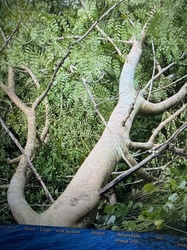
Mmonkeypod (Samanea saman)
Exotic/Tropical Hardwood
Other woods you may like

White Oak
Eastern North America

Whitebeam
Central and Northern Europe

White Mulberry
Europe, Western Asia

Olive
Mediterranean basin and North Africa

Mansonia
West Africa

Freijo
South America (Amazon Basin of northern Brazil)

Birdseye Maple
Eastern North America

Eucalyptus
Australia (with plantations in South America, Africa, Iberia, and Asia)

Goupia
Northern South America (the Guianas, Venezuela, and the Brazilian Amazon)

Soft Maple or Ash (unidentified)
Eastern North America

Red Gum
Native and very widespread across mainland Australia, following inland watercourses, floodplains, and riverbanks in every mainland state; now planted widely elsewhere (Mediterranean, South Asia, Africa, the Americas) as a plantation timber.

Ramin
Southeast Asia — peat-swamp forests of Malaysia, Indonesia (Sumatra, Borneo/Kalimantan), Brunei and the Philippines